Construction projects use different types of netting to help manage site hazards. From debris containment around scaffolding to specially designed fall arrest systems, choosing the correct net starts with understanding its intended purpose.
In this article, we explain common construction net applications and the key details buyers should check before ordering.
Construction Safety Nets: Types, Applications and Selection Tips
What Is a Construction Safety Net?
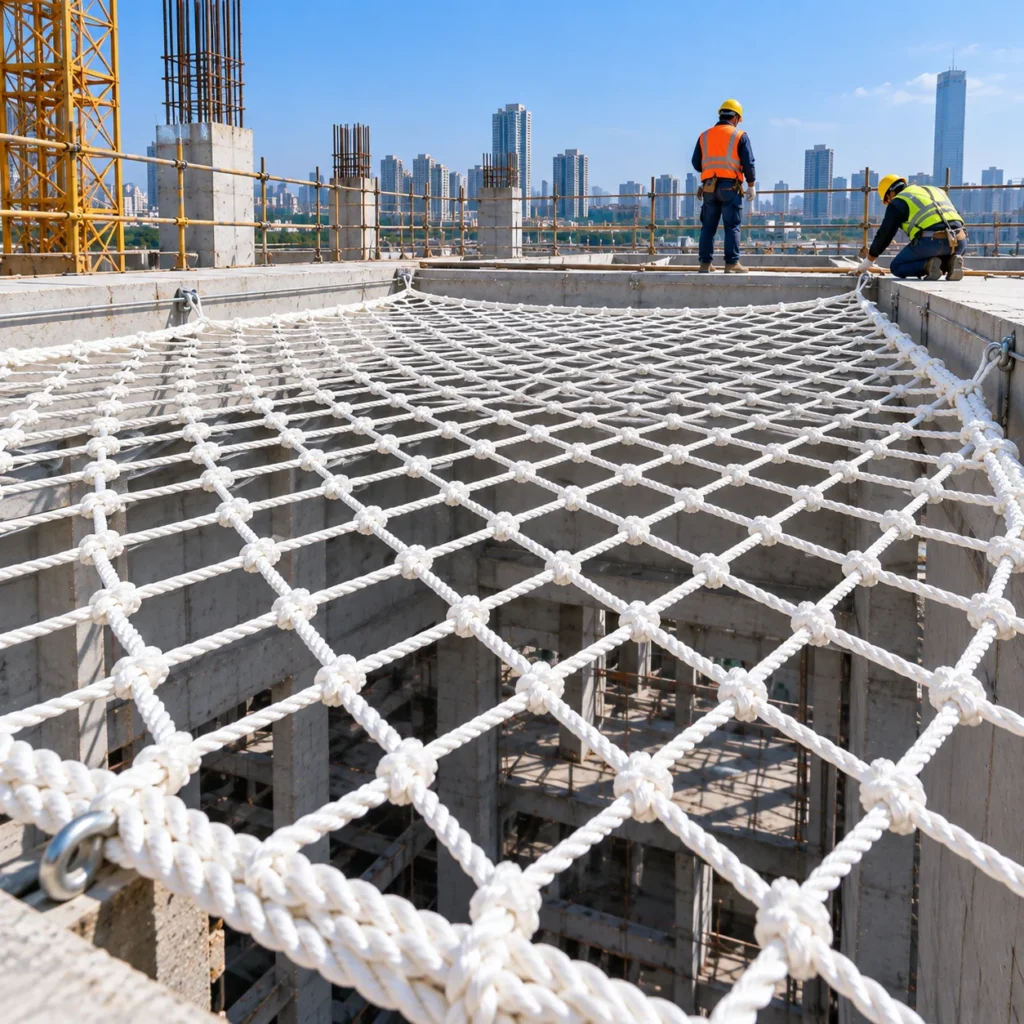
Construction safety netting is a broad term that can describe several products with different functions. Some nets help contain loose materials, while others are engineered and tested as part of a personnel fall protection system.
These products are not interchangeable. A debris net must never be assumed suitable for catching a falling person.
Common Types of Construction Netting
Scaffold Debris Netting
Scaffold debris netting is commonly installed around scaffolding to help contain certain loose materials and limit their movement beyond the work area.
Its suitability depends on the mesh opening, material strength, attachment method and the size and weight of the materials it is intended to contain.
Personnel Safety Nets
Personnel safety nets are designed for use in fall arrest systems. Their performance depends on the complete system, including the net, border ropes, connections, supporting structure and installation layout.
Only use products with documented suitability for the intended application and the applicable project requirements.
Barrier and Enclosure Netting
Barrier netting can help mark work zones and separate areas within a construction site. Lightweight visual barrier mesh should not be treated as an edge protection system or a load-bearing guardrail.
What to Check Before Purchasing
Intended Function
Clearly define whether the net is required for debris containment, area separation or personnel fall arrest. This determines which specifications and supporting documents are relevant.
Material and Outdoor Exposure
Construction nets may use polyethylene, polypropylene or other materials. For outdoor applications, ask about UV stabilization, weather exposure limitations and storage requirements.
Color and fabric weight alone do not establish a net’s safety performance.
Mesh Size and Dimensions
Mesh openings should suit the intended containment task. Confirm the finished dimensions, edge construction and attachment details against the installation plan.
Test Reports and Product Identification
Request documentation that identifies the specific product supplied. Check that any stated performance, test reports and conformity claims apply to that model and intended use.
Where flame resistance is required, request supporting test documentation rather than relying on appearance or a general product description.
Installation Requirements
Netting can create significant wind loads on scaffolding and supporting structures. The installation design must account for these loads, attachment spacing and site conditions.
Personnel safety net systems also require appropriate clearance, positioning and a planned rescue procedure.
Inspection and Maintenance
Follow the manufacturer’s inspection instructions and the site’s procedures. Check for damaged mesh, cuts, weakened edges, loose fixings and deterioration from sunlight, chemicals or heat.
After an impact or other event that may affect performance, stop using the affected system until it has been assessed under the relevant procedures. Do not make improvised repairs to safety-critical netting.
Prepare a Clear Safety Net Enquiry
A detailed enquiry helps suppliers identify a suitable product. Include:
-
Intended application and project location
-
Required net dimensions and quantity
-
Mesh opening and material requirements
-
Edge finishing and attachment details
-
Applicable performance and testing requirements
-
Expected outdoor exposure conditions
-
Packaging and delivery requirements
Discuss Your Project Requirements
Choosing construction netting requires more than comparing price and appearance. Clear specifications and suitable supporting documentation help ensure the product matches its intended role.
Send us your application details, dimensions and project requirements to discuss suitable netting options.